
Location

Leopard Tortoise Care Guide
- posted: Jul. 21, 2025
Overview
Leopard tortoises are impressive in both size and temperament. Known for their calm nature and powerful build, they are often seen rearranging their enclosures, and shifting anything in their path. In Swahili, they are called the “tortoise of the elders,” a tribute to their remarkable lifespan. Others refer to them as Mountain tortoises due to their origin in elevated grasslands. As pets, they grow to substantial sizes and require generous space and a proper diet to thrive.
Species Background
There are two recognized subspecies of Leopard tortoise:
Stigmochelys pardalis pardalis (the more common in captivity)
Stigmochelys pardalis babcocki
They are native to arid and semi-arid regions across eastern and southern Africa, including Ethiopia, Botswana, and South Africa. These tortoises thrive in hot, dry climates across savannas, thorny brushlands, dry forests, and grassy plains. Notably, Leopard tortoises do not hibernate.
Physical Characteristics
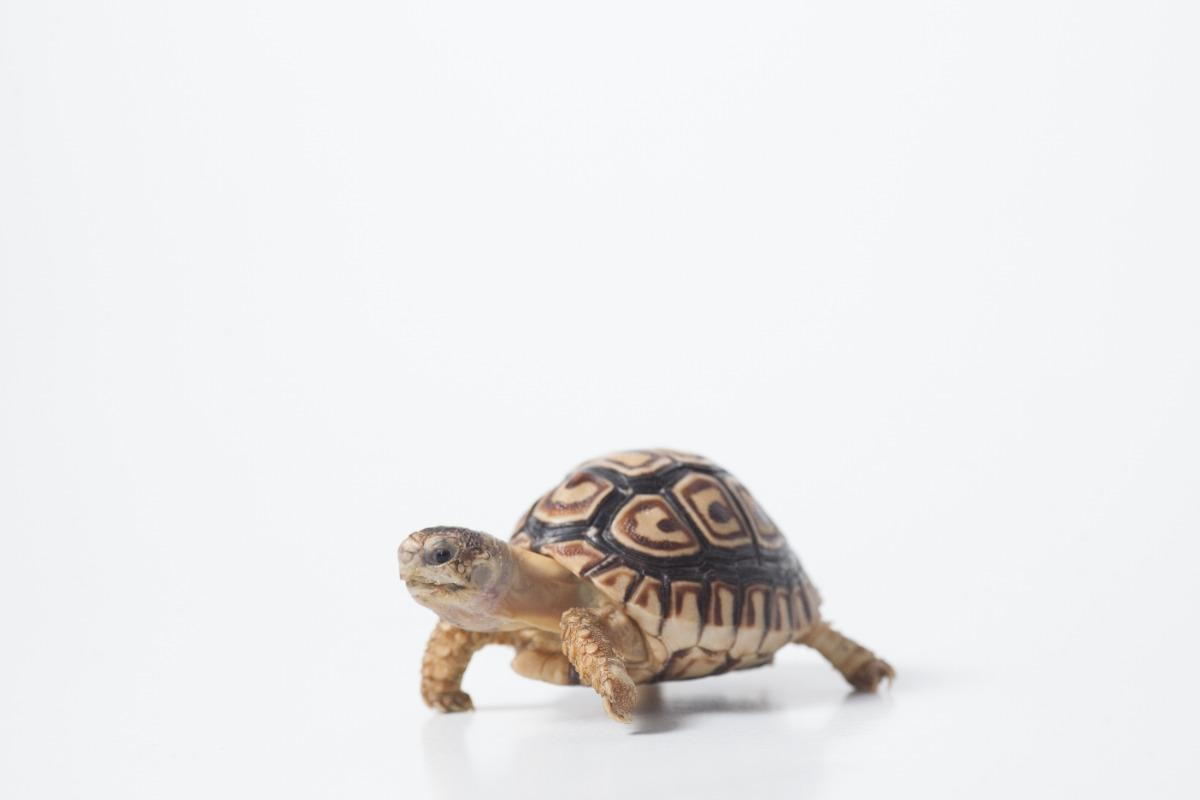
Leopard tortoises have high-domed shells with steep sides and pronounced vertebral scutes, which help them roll back over if flipped. Their shell coloration varies from cloudy yellow or light brown to reddish and olive tones, with distinctive black or dark brown markings that often fade as they age. The underside (plastron) is usually pale yellow with dark streaks.
Typical adults measure between 12 to 18 inches long, though some individuals can reach lengths up to 31 inches.
Their skin ranges from yellow to grayish-brown and may have dark spots. Both rear legs are equipped with large, pointed spurs. Juveniles start off with flatter, rounder shells and duller coloring, becoming more textured and colorful with age. Growth is slow at first, then speeds up around 2 to 3 years old. By age three, they typically weigh around 2.2 pounds and may reach 11 pounds by age 12. Growth significantly slows after sexual maturity.
Defensive Behaviors
Leopard tortoises have three main ways to protect themselves:
Drawing their limbs into their shell
Emitting a loud hiss
Releasing large amounts of urine when lifted
Sex Differences
Males have longer, thicker tails, and the scutes above their tails form a “V” shape. Females have shorter tails and rounded, “U”-shaped scutes. Females also tend to be larger than males.
Housing Needs
These tortoises are active during the day and seek shelter after dusk. They need sturdy, escape-proof enclosures. Shelter can be made from logs, overturned containers with entrances cut out, or wooden hide boxes. As they grow, you will need a larger, custom-built space, ideally with indoor and outdoor options (for the warmer months of the year).
Substrate
For young tortoises, simple, easy-to-clean substrates work best such as reptile carpet with hay on top or plain paper. Adults should have hay in both indoor and outdoor pens. Spot clean daily, and change the substrate every 2–3 weeks.
Gravid females (those carrying eggs) should be provided with a dig box made of sand and soil for nesting. Environmental enrichment such as boulders, logs, and roots is important to encourage natural behaviors and prevent boredom.
Temperature & Lighting
Replicating their natural environment is key. During the active season, maintain daytime temperatures between 82°F and 95°F. The basking area should reach 95–104°F. Night temperatures can drop to 68–86°F. Use well-ventilated setups, avoiding cold drafts. Metal halide bulbs work well to provide heat and full-spectrum light.
UVB lighting is essential. Tortoises need 8+ hours of UVB exposure daily (natural sunlight or bulbs), and 10–14 hours of general lighting. Maintain 40–60% humidity during the day and raise it to 70–80% at night by misting the enclosure, again with the goal of replicating their natural environment.
Caring for Hatchlings
Young Leopard tortoises can start in a 10-gallon tank but will soon outgrow it. They need increasingly larger enclosures, eventually reaching a space of at least 4’ x 8’. Turtle tables or custom indoor pens are ideal.
Adults may require basements, greenhouses, or heated garages. Enclosure space should be four times the shell length of the tortoise, and twice that if housing more than one (plus 10% for each additional tortoise beyond two).
Outdoor Pens:
Outdoor pens should be sunny, spacious, and well protected. A heated structure must be available if you’re keeping them outside year-round. A greenhouse can work well, and some tortoises can learn to use pet doors. Fences should extend 12–24 inches underground and be at least 18–24 inches tall to prevent escape. Leopard tortoises are surprisingly adept climbers.
Diet & Nutrition
Diet is a cornerstone of Leopard tortoise health. A poor diet leads to rapid growth, shell deformities, organ problems, and a shortened lifespan. Never feed human snacks (bread, cookies, rice), grains, or dog/cat food.
Primary Diet (85%)
Should consist of high-fiber grasses and hay. Grazing on natural grass, dandelions, clover, and edible weeds is ideal. When grazing is not possible, provide cut grasses like orchard grass, timothy hay, or Bermuda grass.
Vegetables (10%)
Use dark leafy greens and cactus pads sparingly. Avoid overfeeding commercial produce, which is high in protein and water content.
Fruits (5%)
Give only occasionally, as sugar can cause digestive upset. Chopped salads help prevent selective eating.
Supplements
Adults: Calcium 4-5x/week + multivitamins 1x/week
Breeding females: Daily until eggs are laid
Juveniles: Calcium 7x/week + multivitamins 1x/week
Hatchlings: Calcium 7x/week + multivitamins 1x/week
Fresh water must always be accessible. Weekly (or more often) soaks are recommended to help with hydration and digestion.
Health Concerns
Metabolic Bone Disease (MBD)
Usually caused by low calcium levels, this condition leads to shell and bone deformities and may be fatal. While treatable, some damage can be permanent. See a vet if you notice any shell abnormalities.
Loss of Appetite (Anorexia)
It is common for Leopard tortoises to reduce food intake during cooler months. Ensure temperatures are correct. If this lasts beyond February, or you notice nasal discharge or diarrhea, or any other changes, seek veterinary care.
Parasites
Internal parasites can cause lethargy, diarrhea, or appetite loss. A vet visit is necessary if symptoms arise.
Pyramiding
This condition results in abnormal shell growth due to dietary imbalance, poor hydration, improper temperature and humidity, or lack of exercise. Prevent it through proper husbandry and nutrition. Contact a reptile vet if you suspect pyramiding.
Final Thoughts
Leopard tortoises are a long-term commitment that require thoughtful care and preparation. When raised in a proper environment with an appropriate diet, they can live decades as healthy, thriving companions.
- posted: Jul. 21, 2025
Overview
Leopard tortoises are impressive in both size and temperament. Known for their calm nature and powerful build, they are often seen rearranging their enclosures, and shifting anything in their path. In Swahili, they are called the “tortoise of the elders,” a tribute to their remarkable lifespan. Others refer to them as Mountain tortoises due to their origin in elevated grasslands. As pets, they grow to substantial sizes and require generous space and a proper diet to thrive.
Species Background
There are two recognized subspecies of Leopard tortoise:
Stigmochelys pardalis pardalis (the more common in captivity)
Stigmochelys pardalis babcocki
They are native to arid and semi-arid regions across eastern and southern Africa, including Ethiopia, Botswana, and South Africa. These tortoises thrive in hot, dry climates across savannas, thorny brushlands, dry forests, and grassy plains. Notably, Leopard tortoises do not hibernate.
Physical Characteristics
Leopard tortoises have high-domed shells with steep sides and pronounced vertebral scutes, which help them roll back over if flipped. Their shell coloration varies from cloudy yellow or light brown to reddish and olive tones, with distinctive black or dark brown markings that often fade as they age. The underside (plastron) is usually pale yellow with dark streaks.
Typical adults measure between 12 to 18 inches long, though some individuals can reach lengths up to 31 inches.
Their skin ranges from yellow to grayish-brown and may have dark spots. Both rear legs are equipped with large, pointed spurs. Juveniles start off with flatter, rounder shells and duller coloring, becoming more textured and colorful with age. Growth is slow at first, then speeds up around 2 to 3 years old. By age three, they typically weigh around 2.2 pounds and may reach 11 pounds by age 12. Growth significantly slows after sexual maturity.
Defensive Behaviors
Leopard tortoises have three main ways to protect themselves:
Drawing their limbs into their shell
Emitting a loud hiss
Releasing large amounts of urine when lifted
Sex Differences
Males have longer, thicker tails, and the scutes above their tails form a “V” shape. Females have shorter tails and rounded, “U”-shaped scutes. Females also tend to be larger than males.
Housing Needs
These tortoises are active during the day and seek shelter after dusk. They need sturdy, escape-proof enclosures. Shelter can be made from logs, overturned containers with entrances cut out, or wooden hide boxes. As they grow, you will need a larger, custom-built space, ideally with indoor and outdoor options (for the warmer months of the year).
Substrate
For young tortoises, simple, easy-to-clean substrates work best such as reptile carpet with hay on top or plain paper. Adults should have hay in both indoor and outdoor pens. Spot clean daily, and change the substrate every 2–3 weeks.
Gravid females (those carrying eggs) should be provided with a dig box made of sand and soil for nesting. Environmental enrichment such as boulders, logs, and roots is important to encourage natural behaviors and prevent boredom.
Temperature & Lighting
Replicating their natural environment is key. During the active season, maintain daytime temperatures between 82°F and 95°F. The basking area should reach 95–104°F. Night temperatures can drop to 68–86°F. Use well-ventilated setups, avoiding cold drafts. Metal halide bulbs work well to provide heat and full-spectrum light.
UVB lighting is essential. Tortoises need 8+ hours of UVB exposure daily (natural sunlight or bulbs), and 10–14 hours of general lighting. Maintain 40–60% humidity during the day and raise it to 70–80% at night by misting the enclosure, again with the goal of replicating their natural environment.
Caring for Hatchlings
Young Leopard tortoises can start in a 10-gallon tank but will soon outgrow it. They need increasingly larger enclosures, eventually reaching a space of at least 4’ x 8’. Turtle tables or custom indoor pens are ideal.
Adults may require basements, greenhouses, or heated garages. Enclosure space should be four times the shell length of the tortoise, and twice that if housing more than one (plus 10% for each additional tortoise beyond two).
Outdoor Pens:
Outdoor pens should be sunny, spacious, and well protected. A heated structure must be available if you’re keeping them outside year-round. A greenhouse can work well, and some tortoises can learn to use pet doors. Fences should extend 12–24 inches underground and be at least 18–24 inches tall to prevent escape. Leopard tortoises are surprisingly adept climbers.
Diet & Nutrition
Diet is a cornerstone of Leopard tortoise health. A poor diet leads to rapid growth, shell deformities, organ problems, and a shortened lifespan. Never feed human snacks (bread, cookies, rice), grains, or dog/cat food.
Primary Diet (85%)
Should consist of high-fiber grasses and hay. Grazing on natural grass, dandelions, clover, and edible weeds is ideal. When grazing is not possible, provide cut grasses like orchard grass, timothy hay, or Bermuda grass.
Vegetables (10%)
Use dark leafy greens and cactus pads sparingly. Avoid overfeeding commercial produce, which is high in protein and water content.
Fruits (5%)
Give only occasionally, as sugar can cause digestive upset. Chopped salads help prevent selective eating.
Supplements
Adults: Calcium 4-5x/week + multivitamins 1x/week
Breeding females: Daily until eggs are laid
Juveniles: Calcium 7x/week + multivitamins 1x/week
Hatchlings: Calcium 7x/week + multivitamins 1x/week
Fresh water must always be accessible. Weekly (or more often) soaks are recommended to help with hydration and digestion.
Health Concerns
Metabolic Bone Disease (MBD)
Usually caused by low calcium levels, this condition leads to shell and bone deformities and may be fatal. While treatable, some damage can be permanent. See a vet if you notice any shell abnormalities.
Loss of Appetite (Anorexia)
It is common for Leopard tortoises to reduce food intake during cooler months. Ensure temperatures are correct. If this lasts beyond February, or you notice nasal discharge or diarrhea, or any other changes, seek veterinary care.
Parasites
Internal parasites can cause lethargy, diarrhea, or appetite loss. A vet visit is necessary if symptoms arise.
Pyramiding
This condition results in abnormal shell growth due to dietary imbalance, poor hydration, improper temperature and humidity, or lack of exercise. Prevent it through proper husbandry and nutrition. Contact a reptile vet if you suspect pyramiding.
Final Thoughts
Leopard tortoises are a long-term commitment that require thoughtful care and preparation. When raised in a proper environment with an appropriate diet, they can live decades as healthy, thriving companions.
Monday
8:00 am - 6:00 pm
Tuesday
8:00 am - 6:00 pm
Wednesday
8:00 am - 6:00 pm
Thursday
8:00 am - 6:00 pm
Friday
8:00 am - 6:00 pm
Saturday
Closed
Sunday
8:00 am - 6:00 pm
Location
Peak Exotic Animal Veterinary Specialists
9102 W Ken Caryl Ave Suite 200
Littleton, CO 80128